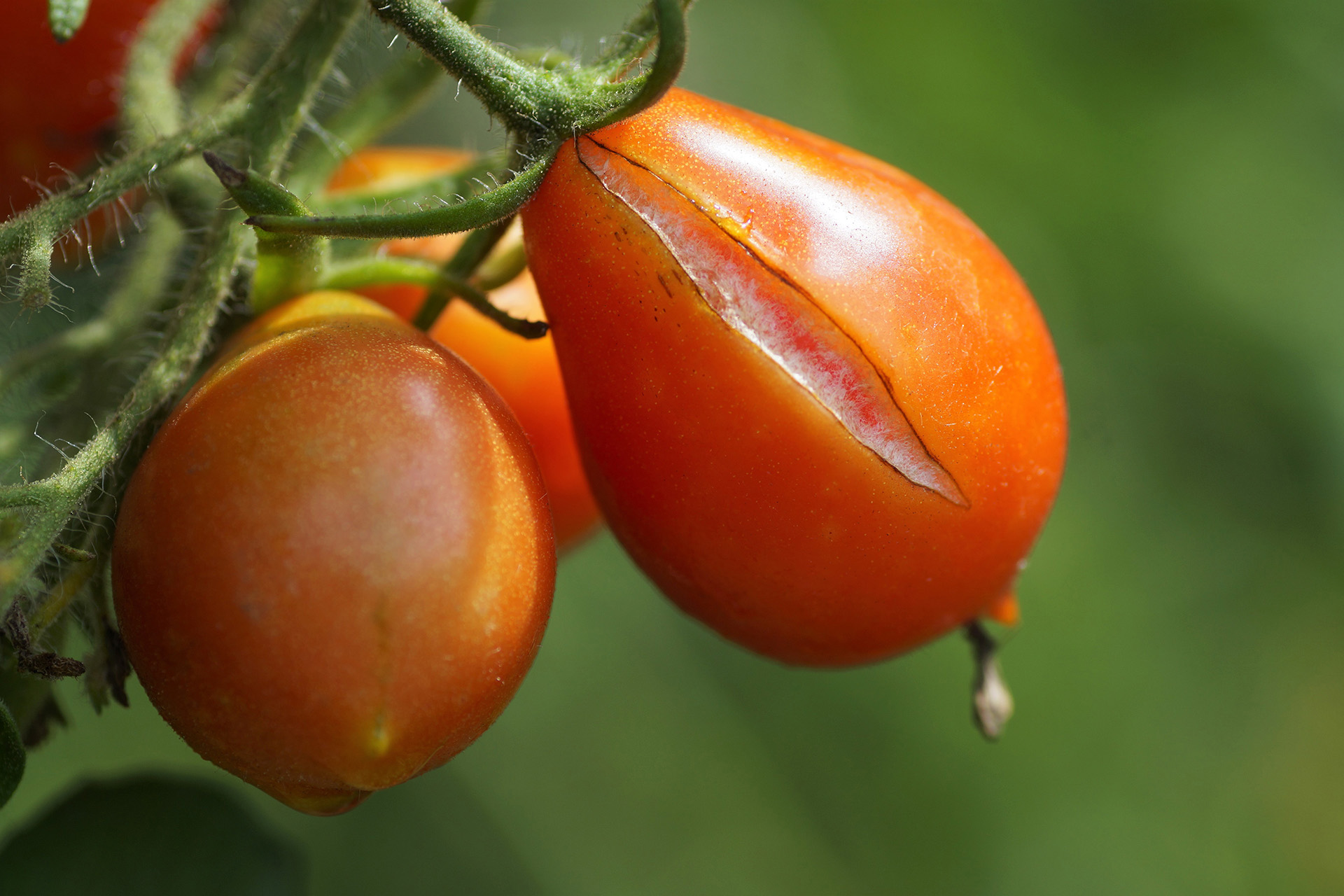
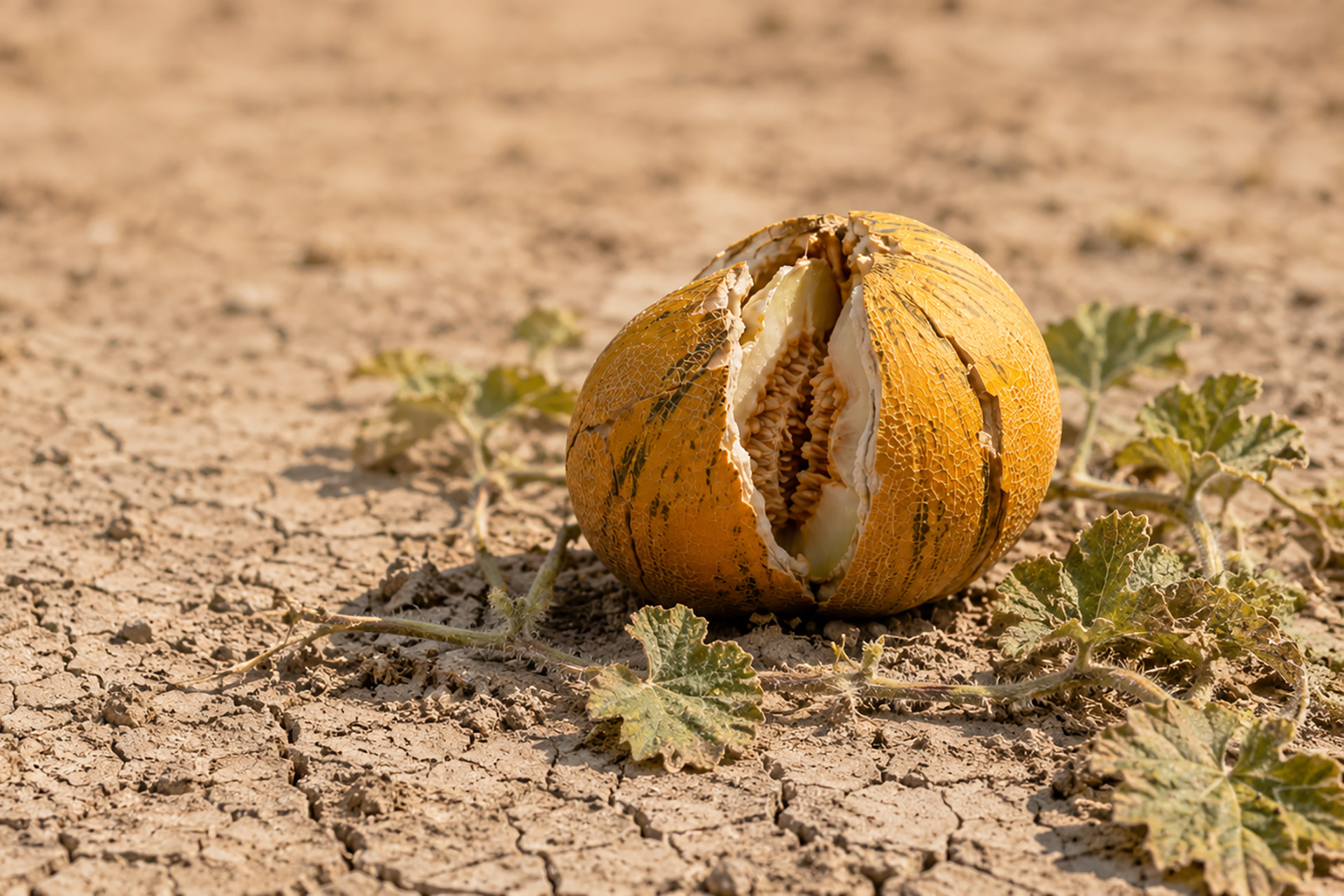
Persian melons can crack when they suddenly receive a large amount of water after a period of dry soil. Under these conditions, the roots quickly absorb moisture and the inside begins to expand faster than the rind can adapt. As a result, small or deep cracks may form on the surface of the melon.
The risk increases especially after heavy rainfall, during excessive watering, or when soil moisture changes frequently from very dry to very wet. The greater these changes are, the greater the pressure placed on the rind of the fruit.
Cracking may occur more often when the fruit is close to ripening, because at this stage the melon has reached a considerable size and the rind no longer expands at the same rate as during the early stages of development.
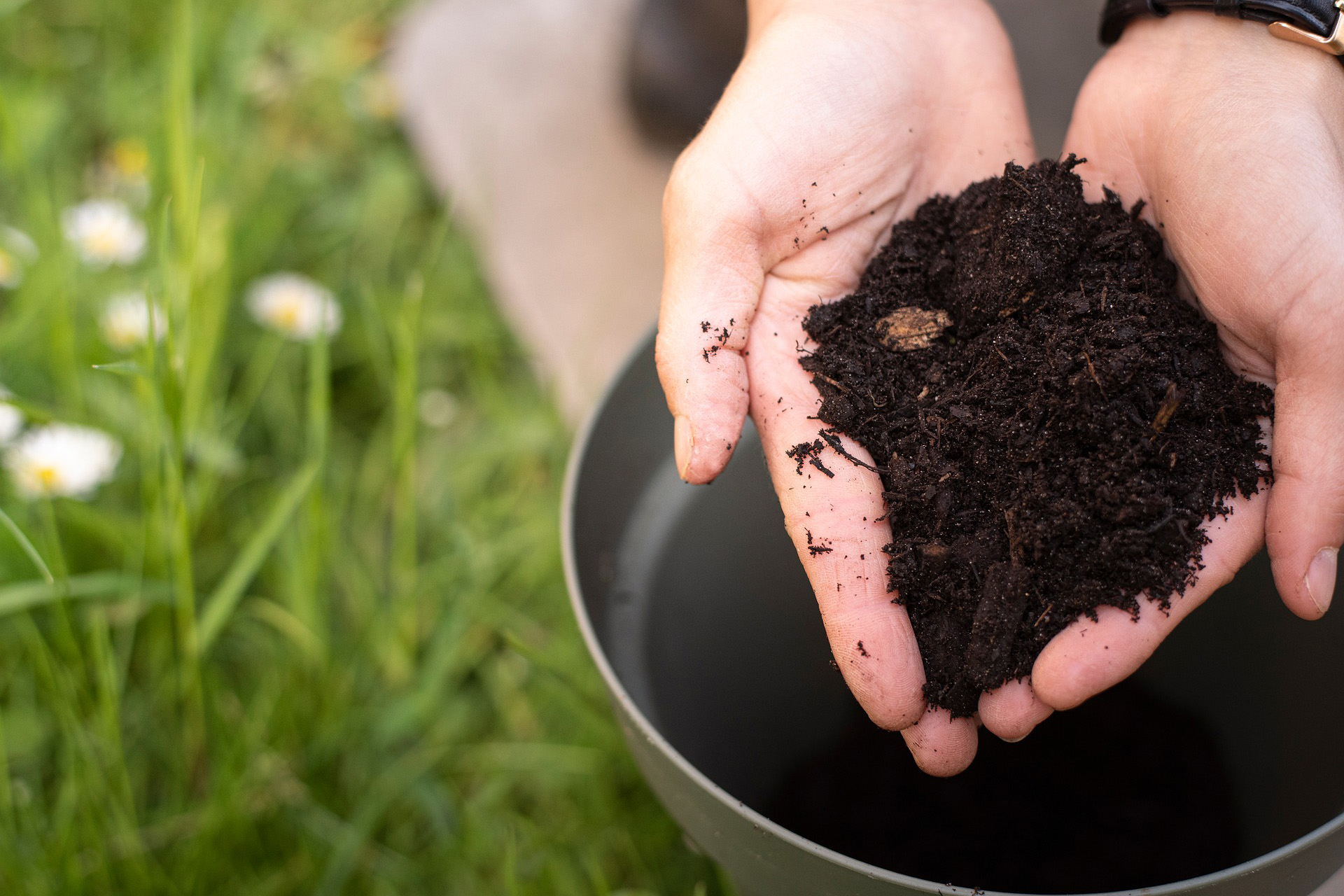
Soil conditions also matter. Very heavy soil, which retains water for a long time, can create excessive moisture around the roots. On the other hand, soils that dry out very quickly can cause frequent cycles of drying and moisture, which encourage cracking.
A cracked melon is not always lost. If the crack is small, fresh, and the fruit shows no signs of rot, it can be inspected and used as soon as possible. However, deep cracks create an entry point for insects, bacteria, and fungi, so damaged fruits should be checked carefully.
Main steps for prevention
-
01
Keep soil moisture consistent
Do not allow the soil to dry out completely between waterings. Large changes in moisture can cause rapid expansion of the fruit and cracking of the rind. Aim to keep the soil consistently slightly moist, but not saturated with water. -
02
Water regularly and moderately
Give the plant water evenly, instead of infrequent waterings with very large amounts of water. A regular watering routine helps the fruit develop gradually and reduces stress on the rind. -
03
Water at the base of the plant
Direct the water toward the root zone and water slowly, so that the moisture can penetrate well into the soil without causing flooding. Slow watering helps the roots absorb water more evenly. -
04
Avoid excessive watering before ripening
As the melon approaches ripening, avoid excessive amounts of water. Sudden and high moisture levels at this stage can encourage fruit cracking. This does not mean that watering should be stopped completely, but large and sudden changes should be avoided. -
05
Add a protective layer over the soil
Use straw, dried grass, or other organic material around the plant to retain moisture and limit sudden changes in soil temperature. This layer also slows the evaporation of water and helps prevent the soil from drying out immediately during hot days. -
06
Check watering after rainfall
After heavy rain, do not water automatically. Check the soil first and resume watering only after the moisture has started to decrease. If the soil is still moist several centimeters below the surface, it usually does not need additional watering. -
07
Ensure good soil drainage
Persian melons grow best in soil that retains enough moisture but does not allow water to accumulate around the roots. In heavy soils, improving the soil structure with organic material may help. -
08
Check moisture before each watering
Do not rely only on the appearance of the soil surface, because it may look dry while deeper down there is still moisture. Check the soil several centimeters below the surface to determine whether the plant truly needs water. -
09
Do not overuse nitrogen fertilizers
Very large amounts of nitrogen can encourage excessively rapid growth of the plant and fruits. Balanced plant nutrition helps the fruit develop more steadily and form a more resistant rind. -
10
Monitor the fruits as they approach ripening
Regularly check developed melons, especially after rainfall or significant weather changes. If a fruit is almost ripe and heavy rain is expected, harvesting at the right time can reduce the risk of cracking. -
11
Remove severely damaged fruits
If a melon has cracked deeply and has started to soften, rot, or attract insects, remove it from the plot. This helps keep the area cleaner and reduces the possibility of problems spreading to other fruits. -
12
Adjust watering according to weather conditions
During very hot days, the plant may need more frequent watering, while in cooler or rainy weather the need for water decreases. A flexible watering schedule is more useful than using the same amount of water every day, regardless of conditions.