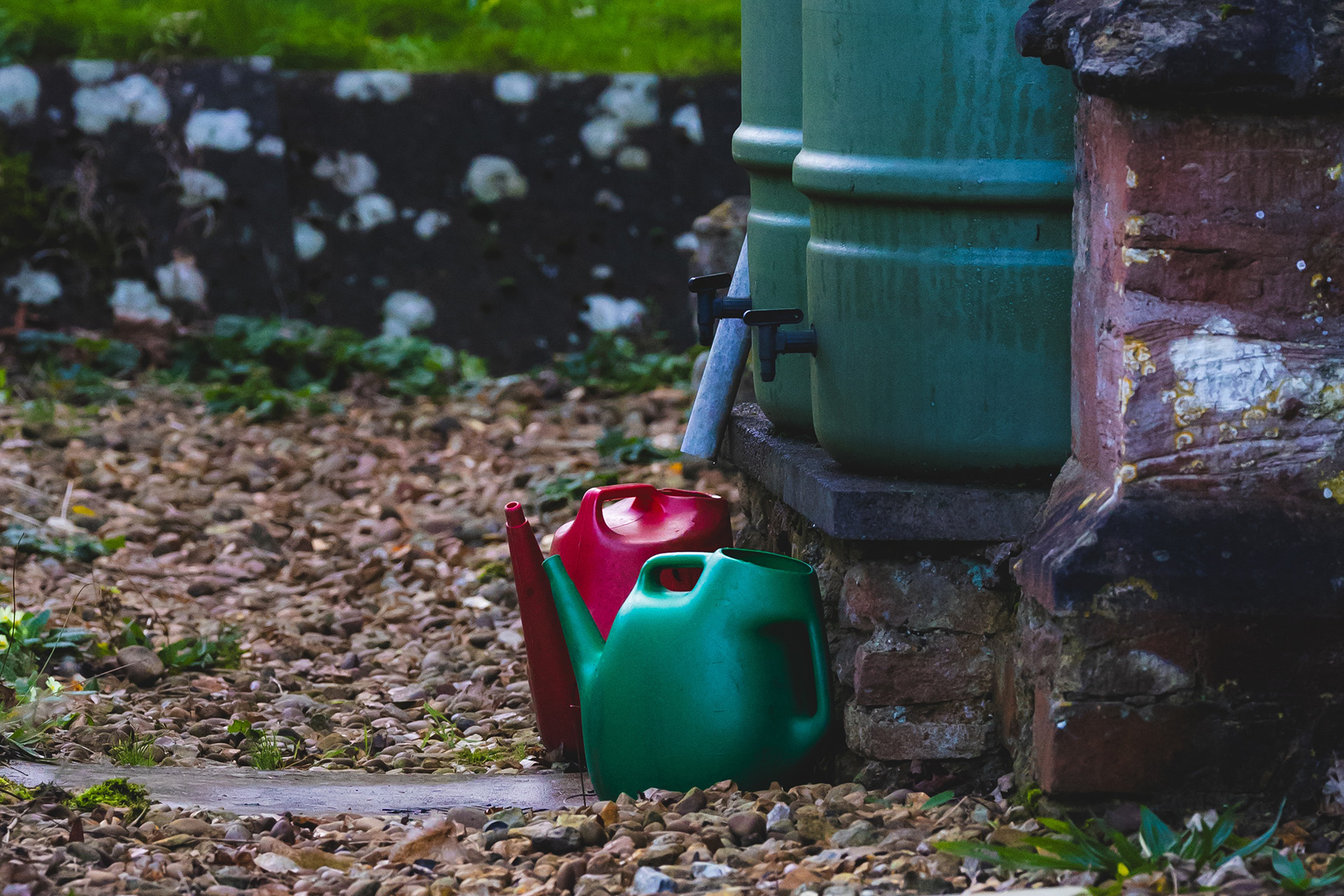
Collecting rainwater is a simple way to save water and have a reserve for watering plants. Water can be collected from roofs and stored in barrels, tanks or suitable containers for use during dry days.
Choose a clean surface
Water can be collected from the roof of a house, greenhouse, or storage building. The surface and gutters should be clean, free of debris, leaves, or materials that could contaminate the water.
Use a safe container
Store the water in a clean and sturdy barrel or tank. The container should have a lid to prevent dirt, insects, animals, or children from getting inside.
Install a filter at the inlet
A simple mesh or filter at the tank inlet helps stop leaves, branches, and debris. Check and clean the filter regularly.
Use it for watering
Collected water can be used to water vegetables, trees, flowers, and green areas. Watering near the roots helps use water with less waste.
The three main parts of the system
A simple system needs a surface where rain falls, gutters or pipes that direct the water, and a tank where it is stored. All parts should be checked and cleaned regularly.
Do not use collected water for drinking, cooking, or washing food without proper treatment and testing. Keep the tank closed and place it on a strong and stable base.
References
- Food and Agriculture Organization of the United Nations. Water Harvesting and Storage.
- United Nations Environment Programme. Rainwater Harvesting.
- World Health Organization. Guidelines for the Safe Use of Rainwater.
- United States Environmental Protection Agency. Rainwater Harvesting and Water Reuse.